


IGCS Colloquium: Jocelyn Holland
Jocelyn Holland’s paper is part of a larger project whose aim is to explore how material techniques and craftmanship, and the qualities of physical materials, shape language and thought. The paper focuses on metaphors derived from techniques of placement and joining. While common examples such as “dovetailing” do a good job of illustrating how technological…

Classical art historian Annetta Alexandridis dies at 58
Annetta Alexandridis, classical archaeologist and art historian in Cornell’s College of Arts and Sciences, died April 13. Known for her hands-on approach, she was associate director of the Harvard-Cornell Exploration of Ancient Sardis, Türkiye and co-curated the Cornell Plaster Cast Collection.
IGCS Colloquium: Jenny Willner
Willner’s paper examines the biological speculation that Sigmund Freud and his Hungarian disciple Sándor Ferenczi jointly developed between 1913 and 1924 and referred to as “bioanalysis.” During the years surrounding the First World War, they inscribed trauma, regression, death, neurosis, hysteria, Nachträglichkeit, and repetition compulsion into a broad spectrum of biological concepts that had been…
IGCS Colloquium: Katrin Lehnen
Katrin Lehnen's paper conceptualizes writing as a cultural and social practice and examines how writing practices are transformed in postdigital contexts. Drawing on praxeological theory, writing is understood as a socially typified form of action embedded in cultural norms, material settings, and implicit knowledge. Using an example from early literacy acquisition, the paper illustrates how…
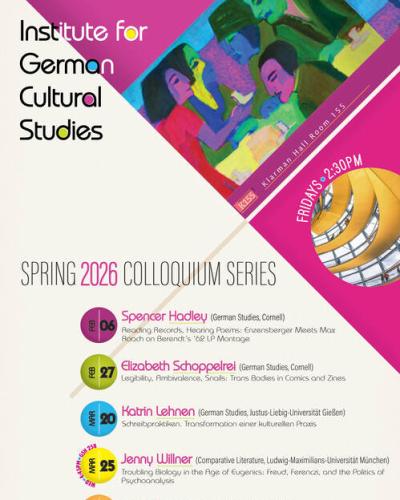
Institute for German Cultural Studies Spring 2026 Colloquium Series
Reading Records, Hearing Poems: Enzensberger Meets Max Roach on Berendt’s ’62 LP Montage
IGCS Colloquium: Hannes Kerber
The paper is part of a larger project that examines Erwin Piscator’s three stagings of Nathan der Weise (1942, 1944, 1952) to argue that the Enlightenment drama, in Piscator’s hands, functioned as a form of political action rather than mere artistic representation. By tracing how the same play was redeployed across wartime America and postwar…
IGCS Colloquium: Vanessa Gubbins
“Rilke’s Re-positions (Umstellungen)” is the fourth chapter of my book, Democracy’s Medium: Poems Critique the Rule of the People in Peru and Germany. This book is an exercise in democratic conversation that I carry out with the reader, with the aims of revisiting the concept of democracy from the basis of our conversation. My book’s…
IGCS Colloquium: Andrew Vielkind
This essay examines experimental cinema practices undertaken in postwar Austria, particularly between the late 1950s and early 1960s. The “metrical” films made by Marc Adrian, and Peter Kubelka have been often theorized as being in dialogue with the Viennese modernist music tradition. Building upon existing scholarship, I underscore the impact of the short-lived Wiener Gruppe…
IGCS Colloquium: Amparo Necker
PEAT AND THE PEOPLE: EMERGENT BODIES IN PINA BAUSCH’S LE SACRE DU PRINTEMPS
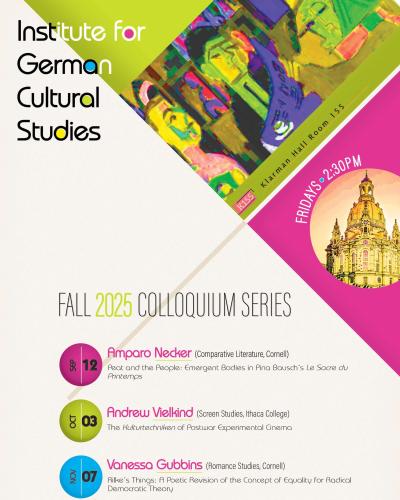
Institute for German Cultural Studies Fall 2025 Colloquium Series
Fridays • 2:30PM • Klarman Hall • Room 155Open to the public
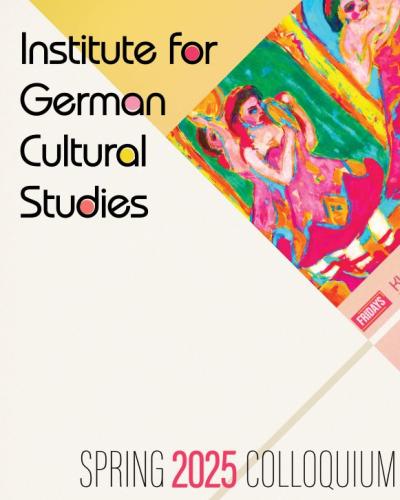
Institute for German Cultural Studies Spring 2025 Colloquium Series
Fridays • 2:30PM • Klarman Hall • Room 155Open to the publicMarch 14: Thomas Schestag (Brown University)
Institute for German Cultural Studies Fall 2024 Colloquium Series
Das dritte Geschlecht. Ein Queer Reading von Thomas Manns Roman Joseph und seine Brüder

Peter Loewen named dean of Arts and Sciences

Coming from the University of Toronto, where he was the director of the Munk School of Global Affairs and Public Policy, Loewen began his five-year appointment as the Harold Tanner Dean of the College of Arts and Sciences Aug. 1.
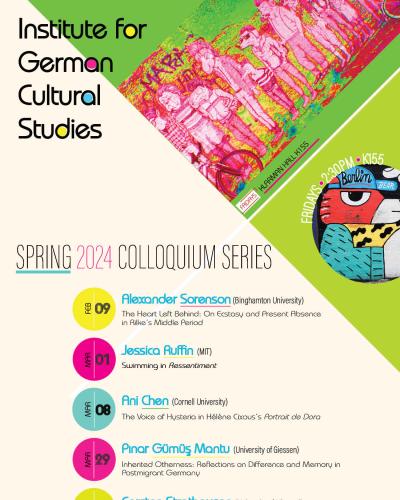
Institute for German Cultural Studies Spring 2024 Colloquium Series
The Heart Left Behind: On Ecstasy and Present Absence in Rilke’s Middle Period

Rehearsing the Revolution: On Damani Partridge’s “Blackness as a Universal Claim: Holocaust Heritage, Noncitizen Futures, and Black Power in Berlin”
On November 2, Professor Damani Partridge, an eminent scholar in Anthropology, Africana Studies, and German Studies at the University of Michigan and Vice President and President Elect of the German Studies Association, gave a lecture on “Blackness as a Universal Claim: Holocaust Heritage, Noncitizen Futures, and Black Power in Berlin” at Cornell. The event was…
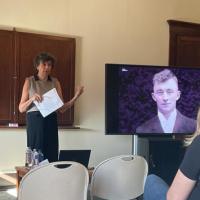
IGCS Event: Esther Dischereit
On September 19, the Institute for German Cultural German Studies, together with the Department of German Studies and the Jewish Studies Program at Cornell had the pleasure of hosting the renowned German-Jewish author and public intellectual Esther Dischereit for a reading of texts from her latest project, the exhibition Wer war Fritz Kittel?
IGCS Colloquium: Dr. Jenny Körber
On September 15, 2023, Dr. Jenny Körber (University of Hamburg) presented her paper “Irdische und himmlische Verhältnisse. Ordnungen der Genealogie und Heraldik” in the IGCS Fall Colloquium Series. Dr. Körber, currently a postdoctoral researcher at the University of Hamburg, combines literary criticism and art history in her research. Her work centers on Jesuits, early modern…
IGCS Colloquium: Ulrike Vedder
Ulrike Vedder: “Auswandern - Heimkehren - Verschellen: Liminales Erzählen und die Kunst des Handelns in der Auswandererliteratur des 19. Jahrhunderts”
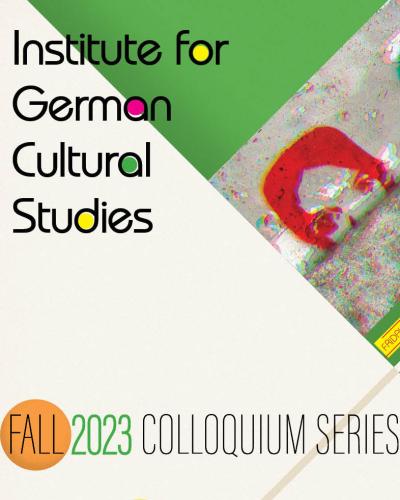
Institute for German Cultural Studies Fall 2023 Colloquium Series
Auswandern– Heimkehren – Verschellen: Liminales Erzählen und die Kunst des Handelns inder Auswandererliteratur des 19. Jahrhunderts
Symposium: New Directions in German Studies
The goal of this symposium is to provide students from across cohorts an opportunity to present their research, answer questions, and receive feedback on their work. It draws on the expertise of a variety of disciplines such as Romance studies, comparative literature, medieval studies, art history, visual and media studies, cultural studies, intellectual history and…
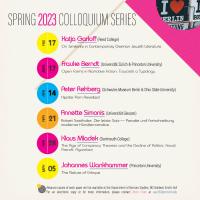
Institute for German Cultural Studies Spring 2023 Colloquium Series
The Age of Conspiracy Theories and the Decline of Politics: Freud, Arendt, Agamben
Reading by Oswald Egger
Date: Wednesday, October 12, 2022 Time: 4:30PM Location: A.D. White House, Guerlac Room
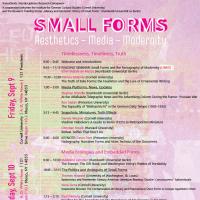
Small Forms: Aesthetics—Media—Modernity (IGCS Conference, Friday, Sept. 9 - Sunday, Sept. 11)
The transatlantic research colloquium “Small Forms: Aesthetics—Media—Modernity,” a collaboration with the Graduiertenkolleg “Literatur- und Wissensgeschichte kleiner Formen” at the Humboldt University, Berlin will take place at Cornell University on September 9-11.
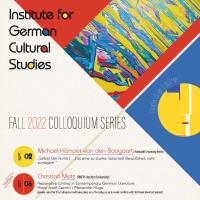
Institute for German Cultural Studies Fall 2022 Colloquium Series
„Selbst der Kunst […] ist eine zu starke nationale Bewußtheit nicht zu-träglich.“

More than $12M donated to support students in 24 hours
On Cornell’s eighth Giving Day, held March 16, 15,905 alumni, students, faculty, staff, parents and friends from more than 80 countries made gifts totaling a record-breaking $12,268,629.

Support Arts & Sciences on Giving Day March 16
Gifts allow the College to fulfill its mission: preparing students to do the greatest good in the world.
Institute for German Cultural Studies Spring 2022 Colloquium Series
All Colloquium meetings, if not indicated otherwise, will take place at A. D. White House, Room 201 at 2:30.

Alumni gift to A&S supports doctoral students in the humanities
A $5 million alumni gift will help to support doctoral students in humanities fields within the College of Arts & Sciences.

Nexus Scholars Program applications now open
The program connects undergraduates in A&S with opportunities to work side by side on research with Cornell faculty from across the College.

Patrizia McBride recognized with article prize
Professor Patrizia McBride won the 2021 Max Kade prize for best article in The German Quarterly.
New A&S program expands undergrad research opportunities
The Nexus Scholars program will leverage the student-to-faculty ratio and the vibrant research enterprise in A&S to expand opportunities for students, while also enhancing the culture of collaborative scholarship at Cornell.

Student Spotlight: David Dunham
After earning an undergraduate degree from New York University, David Dunham, doctoral student in Germanic studies from Springfield, Virginia, chose to pursue further study at Cornell due to the strength of the Germanic studies field and the university’s location in Ithaca.
IGCS Online Colloquium
The final meeting of the Institute for German Cultural Studies Colloquium for this academic year took place on May 8th with a discussion of works in progress by Cornell German Studies’ own Emir Yigit and Jacy Tackett. The former employed a philosophy of the mind framework, drawing upon the work of Immanuel Kant, as well…
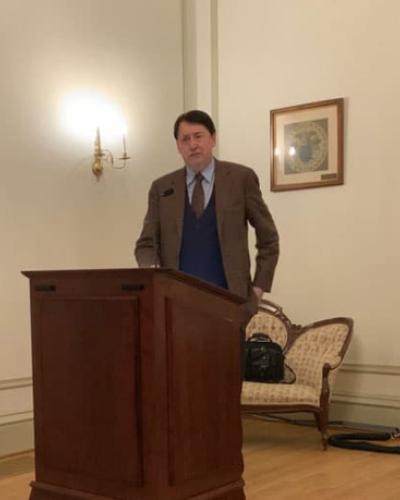
Representations of Race & Ethnicity in German Modernity
German Studies Graduate Student Conference: "Representations of Race and Ethnicity in German Modernity" (March 6-7, 2020)
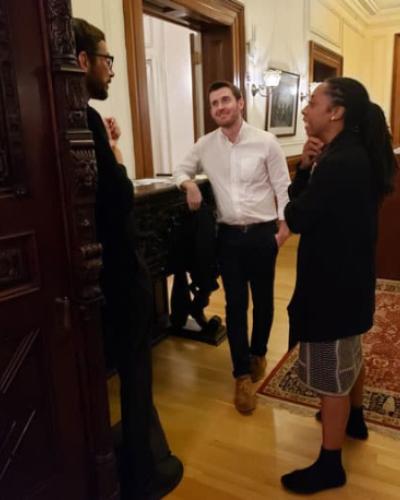
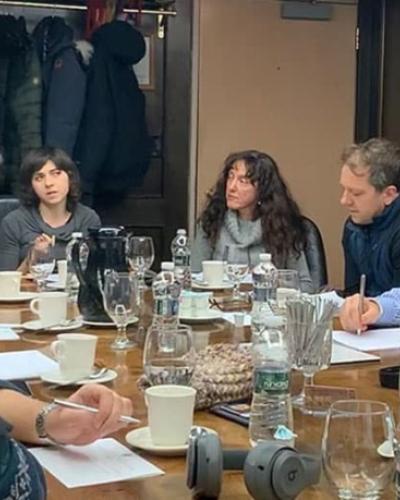
Franz Kafka and the Residues of Realism
On February 7th, Professor Erica Weitzman (Northwestern University) joined our colloquium series with a paper on Franz Kafka’s Das Schloß, which forms part of her forthcoming book, currently entitled At the Limit of the Obscene: German Realism and the Discourse of Matter. The book explores representations of matter and materiality in German-language realist and post-realist…

Support Arts & Sciences students on Giving Day March 12
The College of Arts & Sciences is gearing up for Giving Day on Thursday, March 12 and we hope you'll join in the fun!
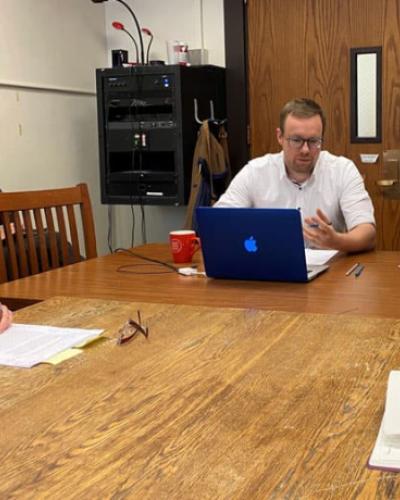
The Loser’s Edge: Writing from the Vantage Point of the Vanquished
At the IGCS colloquium on January 24th, Cornell PhD candidate Matthias Müller began by questioning the traditional assumption that history is written by the victors through an engagement with historian Reinhart Koselleck’s (1923-2006) thesis that history “may be made by the victors but is in fact written by the vanquished.” By investigating neither the origins…
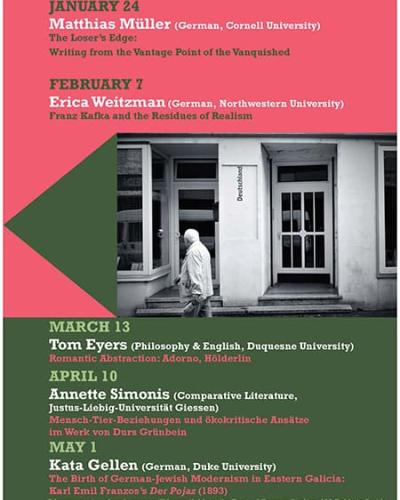
Institute for German Cultural Studies Spring 2020 Colloquium Series
JANUARY 24Matthias Müller (German, Cornell University)The Loser’s Edge: Writing from the Vantage Point of the Vanquished
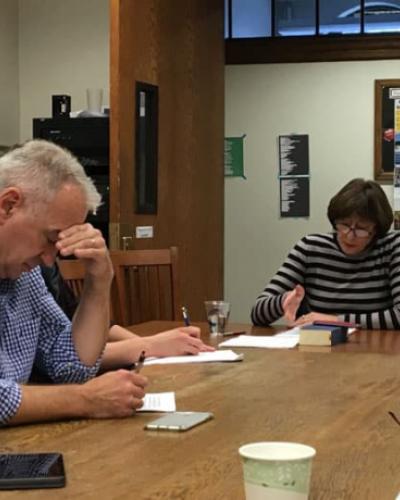
The Prose of Society: Narrative Forms and Social Communications in Goethe’s Unterhaltungen deutscher Ausgewanderten
On November 22nd Professor Inka Mülder-Bach (Munich/Princeton) presented the Colloquium Series with a paper focusing on questions surrounding the aesthetic, political, and social stakes of “prose” as both a broad, complex literary medium and as a metaphor underlying certain conceptions of modernity around 1800. Mülder-Bach began by returning to the Latin etymological origins of the…
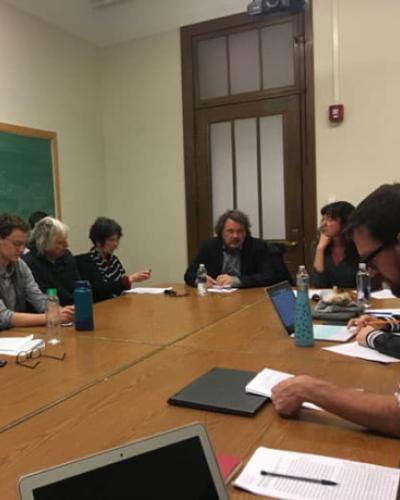
Money and Media Theory
On November 11th, Dr. Jens Schröter (University of Bonn) joined our colloquium series with a paper entitled “Money and Media Theory.” As the title suggests, Professor Schröter’s research brings together theories of money and media, investigating the central question of whether media theory can contribute something to the discussion of money that other disciplines dealing…
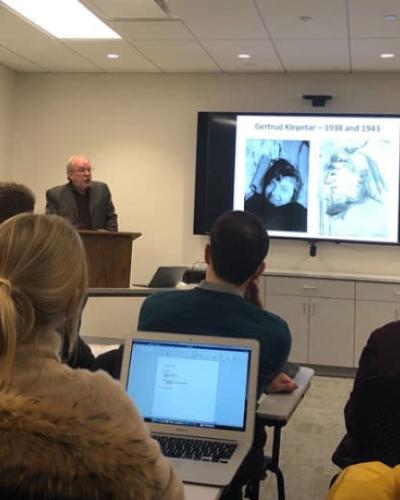
H.G. Adler: A life in Many Worlds
On November 5th, Professor Peter Filkins (Bard College at Simon’s Rock) joined us for an insightful lecture on the life and work of H.G. Adler (1910-1988), a survivor of Theresienstadt and Auschwitz who recorded his experiences in both scholarly and literary writing. Despite the extent of Adler’s work, which includes modernist novels, poetry, short stories…
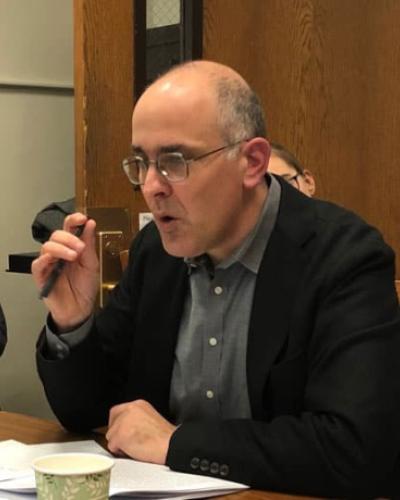
The Mob, the People and the Political: Rereading The Origins of Totalitarianism
On October 18th, Professor Patchen Markell (Government, Cornell University) joined our Fall Colloquium Series with a paper entitled “The Mob, the People and the Political: Rereading The Origins of Totalitarianism.” In the essay Markell investigates Arendt’s use of the term “mob” in Origins with specific attention to her treatment of European imperialism as well as…
CowJews and Indians: How Hitler Scared My Relatives - and I Woke Up in an Iroquois Longhouse with a Picture of Jesus, Reminding Me - for the Wrong Reason - That I Owe the Mohawks Rent
Marc Halberstadt’s film begins as an attempt to defamiliarize the question of land ownership in the United States through an analogy with the violent seizure of Jewish property in Germany during the 1930’s. Because Halberstadt’s family lost their home in Nazi Germany before fleeing to the US and settling on Mohawk tribal lands, Halberstadt attempts…
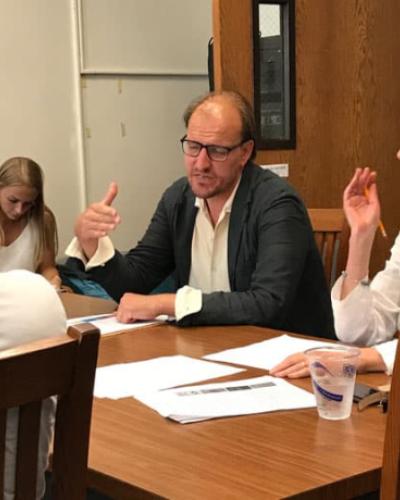
Dimensions of the Modern Epic - the Example of Phantasmatic Orality
This semester’s Institute for German Cultural Studies (IGCS) colloquium series opened Friday, September 6th with a discussion of a paper by Mark-Georg Dehrmann (Humboldt University, Berlin) entitled “Dimensions of the Modern Epic – the Example of Phantasmatic Orality.” Taking as its point of departure Hegel’s claim that the epic was dead by the beginning of…
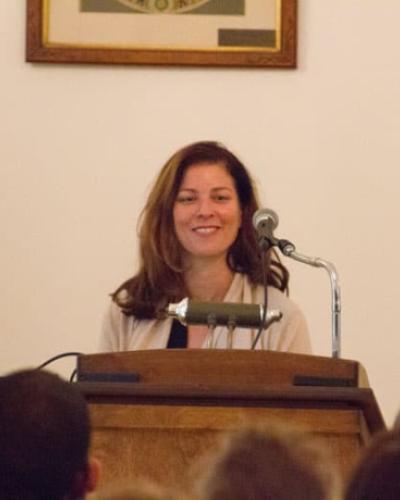
Re-Imagining the Discipline: German Studies, the Humanities, and the University, Sept. 13-14, 2019
Day 1, Panel 1: “German Studies, the Humanities, and the University,” with B. Venkat Mani (University of Wisconsin-Madison) and Leslie Morris (University of Minnesota)
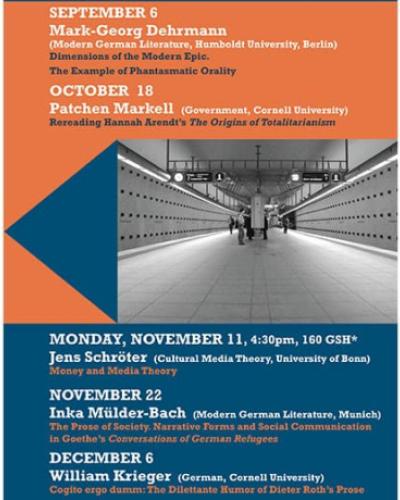
Institute for German Cultural Studies Fall 2019 Colloquium Series
SEPTEMBER 6Mark-Georg Dehrmann (Modern German Literature, Humboldt University, Berlin)Dimensions of the Modern Epic. The Example of Phantasmatic Orality
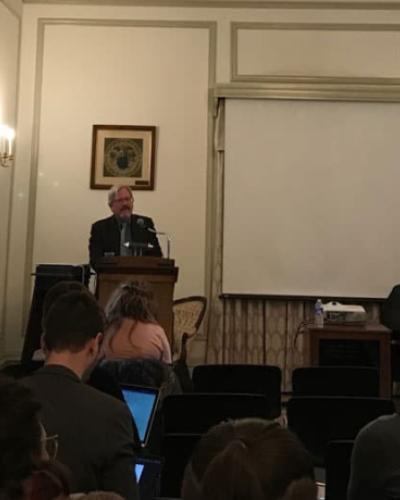
Without Naming It: Pragmatics and Poetics of Pronouns
On Friday, March 22nd, the German Studies Graduate Student Conference kicked off its first panel by focusing on the philosophical problems involved in using pronouns. The panel featured papers on Hegel by Emir Yigit (Cornell, German), on Kant and Descartes by Søren Larsen (Cornell, German), and on contemporary analytical approaches by Alec Pollak (Cornell, English).…
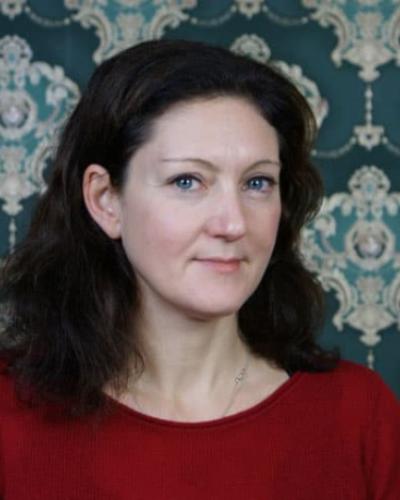
2019 Writer in Residence Rebekka Kricheldorf
On the afternoon of February 28th, the German writer-in-residence Rebekka Kricheldorf gave a masterclass focusing on her new play Testosterone, which was concurrently having its English-translation première at the Cherry Arts Space in Ithaca. Conducted in German, the masterclass took on the form of a seminar, which allowed for intensive group discussion. All participants had…